
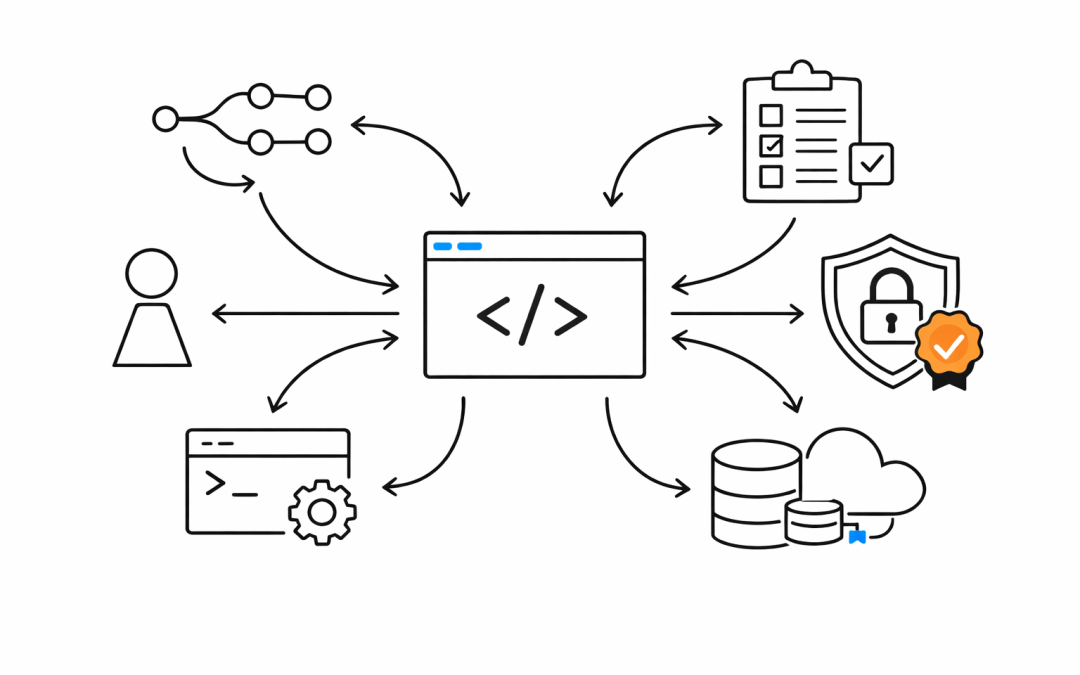
Microsoft’s VS Code Agents Preview marks one of the most significant shifts in how development teams will work inside their primary tool. For engineering leaders at Australian mid-market organisations, this is not just another IDE update — it is the beginning of agent-native software development, and the decisions made now about adoption, governance, and team readiness will shape productivity and risk outcomes for the next several years.


What the VS Code Agents Preview Actually Is
The VS Code Agents Preview is a dedicated application that ships alongside VS Code Insiders. It transforms the familiar code editor into a control centre for autonomous AI agents that can plan multi-step coding tasks, execute them across files and repositories, run terminal commands, interpret errors, and self-correct — all within a supervised, human-in-the-loop workflow.
This is not the autocomplete-style code suggestion that teams have grown accustomed to with GitHub Copilot. Agent mode operates at a fundamentally different level. An engineering lead can describe a feature requirement, and the agent will analyse the codebase, identify relevant files, propose and implement changes, run tests, respond to compiler or linter errors, and iterate until the task is complete.
The key architectural shift is parallelism. The Agents Preview supports multiple concurrent agent sessions, each running in isolated Git worktrees. A single developer can kick off three or four tasks simultaneously — a refactoring job in one session, a bug fix in another, and a new feature scaffold in a third — without any interference between them.
Why This Matters for Australian Engineering Teams
Australian mid-market organisations typically operate with lean engineering teams relative to their enterprise ambitions. A team of fifteen developers supporting a platform that serves hundreds of thousands of users is not unusual. In that context, the productivity multiplier that agent-native workflows offer is not incremental — it is transformational.
Early adopters are reporting that tasks which previously consumed an entire sprint cycle for a single developer can now be completed in hours when properly specified and delegated to an agent. But the operative phrase there is “properly specified.” The organisations seeing the largest gains are those investing in specification quality, not just agent tooling.
This connects directly to a broader shift already underway across enterprise development — the move from writing code to writing specifications. When agents fill in vague instructions with their best guesses, the output is unreliable. When teams provide detailed specs with clear outcomes, non-goals, edge cases, and acceptance criteria, the agents produce dramatically better results.
The Capabilities Engineering Leaders Should Evaluate
Several features in the Agents Preview deserve close attention from leaders evaluating its fit for their organisation.
Chat checkpoints and rollback allow teams to restore their workspace and chat history to any previous state. This is critical for enterprise environments where a failed agent execution needs to be cleanly unwound without manual intervention across multiple files.
The Model Context Protocol (MCP) is an open protocol that functions as a universal integration layer between agents and external tools. Through MCP, agents can access databases, APIs, CI/CD pipelines, cloud platforms, and custom internal tools. For organisations with complex internal toolchains, this is the feature that makes agent adoption practical rather than theoretical.
Explicit confirmation for sensitive file changes ensures that agents operating in Agent Mode request approval before modifying files flagged as sensitive. This addresses one of the most common objections from security and compliance teams — the concern that an autonomous agent might alter production configurations, secrets files, or governance-controlled artefacts without human oversight.
Support for frontier AI models including GPT-5, Claude, and Gemini means that organisations are not locked into a single vendor’s reasoning capabilities. Teams can select the model best suited to each task, balancing cost, speed, and quality.
The Governance Gap Most Organisations Are Not Ready For
The technology itself is impressive. The governance frameworks around it are, for most organisations, nonexistent.
When a developer writes code manually, the organisation has a clear chain of accountability: the developer authored it, a reviewer approved it, and the CI/CD pipeline validated it. When an agent generates code from a natural-language prompt, that chain becomes ambiguous. Who is responsible for AI-generated code that introduces a security vulnerability? Who audits the prompt that led to the output? How does the organisation distinguish between human-authored and agent-authored code in a compliance audit?
These are not hypothetical questions. They are the questions that regulators, auditors, and enterprise customers will begin asking in the next twelve to eighteen months.
Organisations adopting VS Code Agents Preview should establish clear policies covering several areas. Usage boundaries need to define which repositories, branches, and environments agents are permitted to operate in. Audit and traceability requirements should ensure that all agent interactions are logged, including prompts, tool calls, and file modifications. Review workflows must mandate human approval for agent-generated pull requests, with the same rigour applied to human-authored code. Data residency considerations are particularly relevant for Australian organisations handling citizen data or operating under the Privacy Act — understanding where prompts and code snippets are processed is essential.
Security Implications That Cannot Be Deferred
Autonomous coding agents expand the attack surface in ways that traditional application security models were not designed to address.
An agent with terminal access can execute arbitrary commands. An agent integrated via MCP with a database can query and modify data. An agent operating across multiple repositories can introduce cross-repository dependencies. Each of these capabilities is powerful and each introduces risk vectors that security teams need to model.
The VS Code Agents Preview includes several built-in safeguards — explicit approval prompts, scoped permissions, and terminal output monitoring. But these are guardrails, not a complete security architecture. Organisations should treat agent permissions with the same rigour as service account permissions: least privilege, scoped access, and regular review.
The AGENTS.md file convention, which allows repository maintainers to provide context and constraints to agents operating in their codebase, is an early but important governance mechanism. Engineering teams should begin documenting agent boundaries in their repositories now, even before full adoption.
What a Practical Adoption Path Looks Like
For Australian engineering leaders evaluating the VS Code Agents Preview, a phased approach is both practical and prudent.
Phase one involves controlled experimentation. Select a small team — ideally one with strong specification discipline — and deploy the Agents Preview on a non-production repository. Measure the quality of agent output, the time saved, and the overhead introduced by review and governance.
Phase two focuses on governance framework development. Based on the findings from phase one, establish the policies, review workflows, and audit requirements that will govern broader adoption. This is the phase where security, compliance, and legal teams should be engaged.
Phase three enables broader rollout. With governance frameworks in place, expand adoption to additional teams and repositories. Monitor for patterns — which types of tasks produce the best agent outcomes, where human intervention is consistently required, and where the productivity gains justify the governance overhead.
The Competitive Dimension
The organisations that adopt agent-native development workflows effectively will build and ship software faster than those that do not. For Australian mid-market companies competing against larger enterprises with deeper engineering benches, this is a genuine equaliser.
But the advantage only materialises when adoption is deliberate. Organisations that hand agents to developers without governance frameworks, specification standards, or security policies will not accelerate — they will accumulate technical debt and compliance risk at machine speed.
The VS Code Agents Preview is the clearest signal yet that agent-native development is moving from experiment to mainstream tooling. The engineering leaders who invest in understanding it now — not just the technology, but the organisational changes it demands — will be the ones best positioned when it reaches general availability.
If your organisation is evaluating how AI-powered development tools fit into your engineering strategy and governance framework, our team can help you assess readiness, design adoption pathways, and build the policies that make agent-native workflows both productive and safe. Get in touch with CPI Consulting to start the conversation.
Discover more from CPI Consulting
Subscribe to get the latest posts sent to your email.