
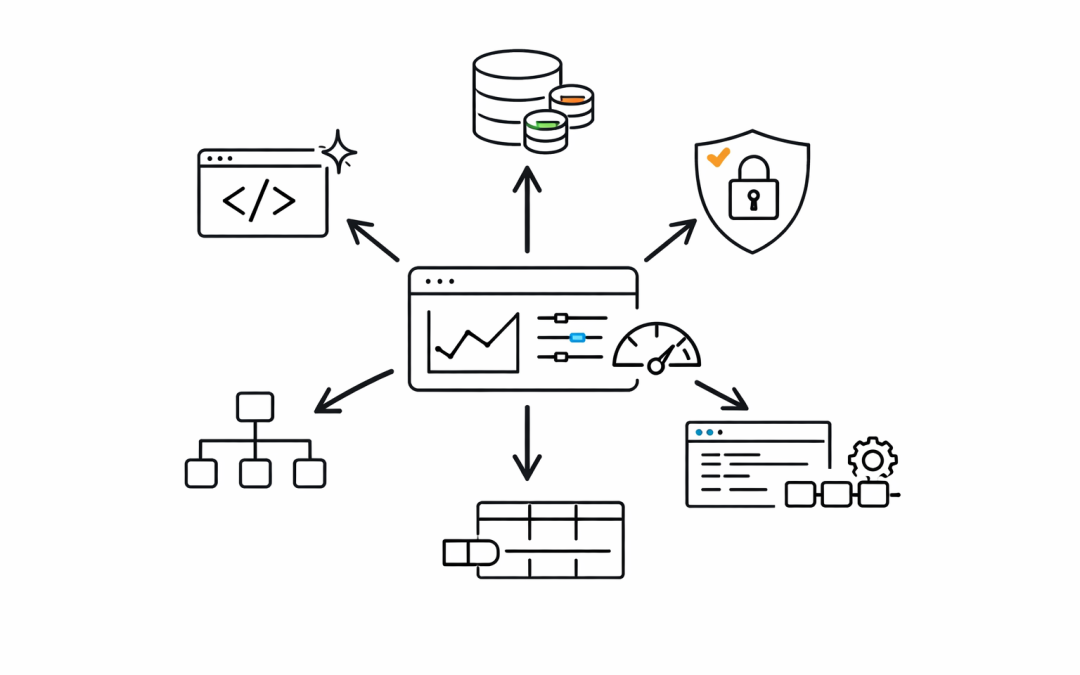
On June 1, 2026, GitHub changed Copilot from a premium-request model to usage-based billing built around GitHub AI Credits. That sounds like a pricing update. For many organisations, it is actually a governance update.


Copilot is no longer a tool that can be treated as a flat per-seat productivity add-on. Once usage is metered by model choice, token volume, agent behaviour, and code review activity, the conversation moves beyond engineering. It becomes a finance, risk, and operating model discussion as well.
For boards, CIOs, and technology leaders, this is the point where AI coding spend starts to look less like software licensing and more like cloud consumption.
What GitHub Actually Changed
GitHub announced on April 27, 2026 that all Copilot plans would move to usage-based billing from June 1, 2026. Under the new model, usage consumes GitHub AI Credits based on token consumption, including input, output, and cached tokens.
Base subscription pricing did not change. What changed is the cost behaviour of advanced usage. A short Copilot chat, a long-running agent session, and model-heavy coding workflows are no longer treated as economically identical.
GitHub also made three details especially important for business customers.
First, each plan now includes a monthly AI Credit allowance rather than a bank of premium requests.
Second, organisations can apply budget controls at enterprise, cost centre, and user levels, with user-level budgets now generally available.
Third, Copilot code review now consumes GitHub Actions minutes as well as GitHub AI Credits, which means some organisations now have two separate meters to watch for the same developer workflow.
That combination is why this matters beyond the engineering budget.
Why Finance Leaders Should Pay Attention
Seat-based SaaS pricing is easy to explain in a board meeting. Variable AI consumption is not.
When spend depends on how people use the tool, which models they choose, how often they trigger agentic workflows, and whether code review automation is switched on, monthly variance becomes part of the operational picture. The upside may still be strong, but the predictability changes.
That is why GitHub’s shift matters. It turns Copilot from a procurement decision into an ongoing management discipline.
For a mid-market organisation, that discipline usually comes down to four questions.
Who is allowed to use the most expensive workflows.
Which teams are generating measurable value from higher AI usage.
What guardrails are in place before included credits run out.
Who owns the combined story across Copilot licensing, AI Credits, and GitHub Actions consumption.
If nobody can answer those questions clearly, the issue is no longer just tooling. It is governance.
The Real Risk Is Not Overspend Alone
The bigger risk is invisible spend without a policy framework around it.
Many organisations rolled Copilot out under a familiar software mindset. Licences were assigned, pilots were launched, and teams were encouraged to experiment. That made sense when costs felt bounded and simple.
Usage-based billing changes the shape of that decision. Heavy users can now consume materially more value and materially more budget than occasional users. Some of that usage will be productive. Some will be duplication, weak prompting, unnecessary model escalation, or agent workflows pointed at the wrong problems.
Without reporting and policy, leaders cannot tell the difference.
That creates a gap between adoption metrics and business value. Usage may rise, but the organisation still cannot explain whether Copilot is reducing cycle time, improving code quality, accelerating delivery, or simply moving cost into a less visible bucket.
Boards do not need token-level detail. They do need confidence that AI-enabled development is being governed with the same seriousness as cloud cost, cyber risk, and vendor concentration.
What A Sensible Operating Model Looks Like
This does not require slowing teams down. It requires moving from broad enthusiasm to deliberate controls.
Start with visibility. Technology leaders should be able to see licence assignment, consumption trends, high-usage groups, code review activity, and where GitHub Actions minutes are being pulled into Copilot-related workflows.
Then move to policy. User-level budgets should be set before usage becomes a surprise. Power users may deserve higher limits, but those limits should be attached to clear use cases rather than default access for everyone.
Next comes workload design. Not every task needs the most expensive model or the longest-running agent loop. Organisations should decide where advanced agentic coding actually produces better outcomes and where lightweight assistance is enough.
Finally, connect the spend to business measures the board already understands. Faster delivery, reduced rework, better security review coverage, and improved engineering throughput are all reasonable outcomes. Raw usage is not.
The CloudProInc View
GitHub’s AI Credit model is not a reason to avoid Copilot. It is a reason to manage it more maturely.
The organisations that do this well will not be the ones that simply clamp down on usage. They will be the ones that define where AI coding assistance creates real leverage, set budgets around those workflows, and report outcomes in language the executive team can trust.
That is why GitHub AI Credits turn Copilot spend into a board metric. Once usage becomes variable, AI-assisted development stops being just a developer tooling story. It becomes part of how the business governs cost, automation, and delivery risk.
If your organisation is expanding Copilot beyond a small pilot, our team can help design the guardrails, reporting model, and governance approach needed to keep AI coding productivity aligned with budget and business outcomes.