
In this blog post Ads Are Coming to ChatGPT we will explain what’s changing, why it matters, and how to respond pragmatically. The title says it plainly: Ads Are Coming to ChatGPT What IT Leaders and Devs Should Do Now—and for many teams, it will affect how you think about trust, privacy, and product usage policies.


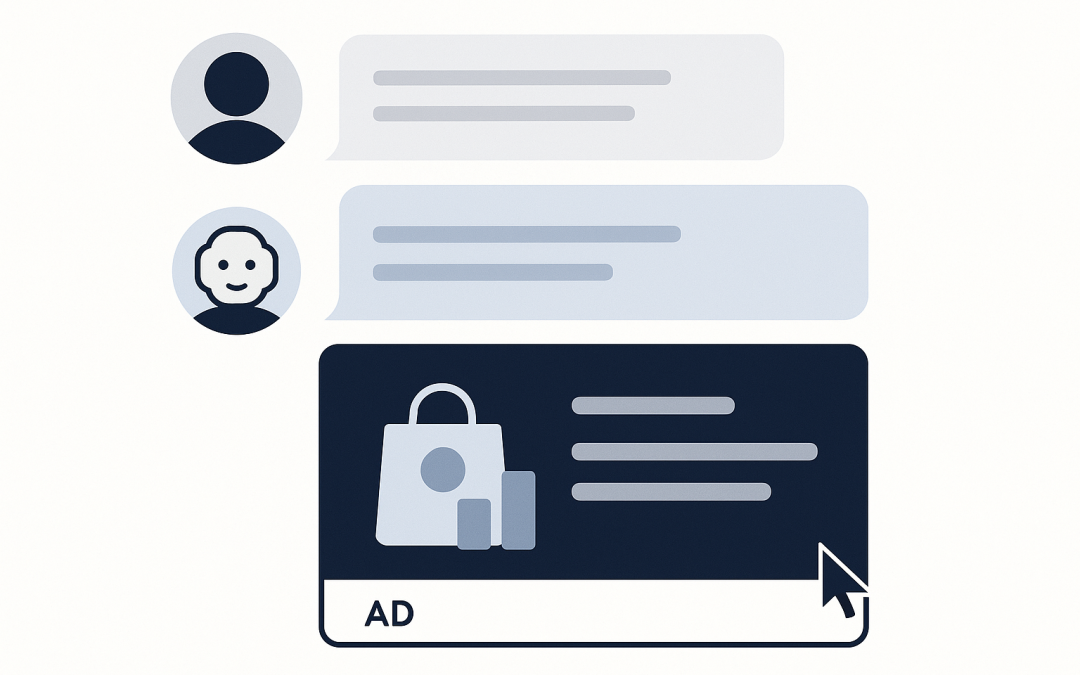
OpenAI has publicly stated it plans to test ads inside ChatGPT for logged-in adult users in the U.S. on the Free and ChatGPT Go tiers, while keeping Plus, Pro, Business, Enterprise, and Edu ad-free. Ads are intended to appear below the assistant’s answer, clearly labeled and separated from the organic response.
At a high level, this is a monetisation shift. AI assistants are expensive to run, and ads are a proven way to subsidise free access. The key question for IT professionals isn’t “will ads exist?” but “how will ads interact with the AI experience we depend on for accurate answers and safe handling of data?”
What OpenAI is actually introducing
Based on OpenAI’s published approach, the initial ad experience is designed around a few principles:
- Placement: ads show at the bottom of answers when relevant to the current conversation.
- Separation: ads are clearly labeled and visually separated from organic output.
- Scope: early tests are for Free and Go users in the U.S.; paid business-grade plans remain ad-free.
- Safety guardrails: OpenAI has said ads are restricted around sensitive or regulated topics (for example, health and politics) and not shown to users under 18 (including where OpenAI predicts the user is under 18).
Those constraints matter because they shape how much “ad logic” can bleed into normal assistant behavior.
The core technology behind ads in ChatGPT
Traditional web advertising is often about tracking clicks across sites and building profiles. In ChatGPT, the most important technical difference is that the conversation itself is the context. The ad system can treat the user’s prompt as a real-time signal of intent (for example, “recommend a laptop for Python development under $2k”).
Conceptually, ad delivery here looks like a retrieval and ranking pipeline running alongside the model:
- Intent detection: classify whether the current turn has commercial intent, and whether it is eligible (not a sensitive category).
- Candidate retrieval: fetch a set of sponsored candidates (products/services) that match the detected intent and geo.
- Personalisation controls: optionally tailor based on allowed data (OpenAI describes user controls like turning off personalisation and clearing data used for ads).
- Ranking: score candidates by relevance and predicted usefulness, then select what to show.
- Rendering: present the ad in a separate module below the assistant answer with clear labeling and feedback controls (dismiss/why am I seeing this).
Crucially, OpenAI says ads do not influence the answer ChatGPT generates. Think “sidecar widget,” not “sponsored token generation.” That distinction is what makes the system viable for professional usage—assuming the separation is enforced in practice. (help.openai.com)
How this relates to ChatGPT Search and shopping results
If your teams already use ChatGPT search features, it’s important to distinguish organic shopping-style results from ads. OpenAI has stated that product results shown for shopping intent can be selected independently and are not ads. Ads, by contrast, are explicitly sponsored placements with labeling. This split will matter for user training and for internal documentation. (help.openai.com)
What changes for IT, security, and governance
Even if ads are visually separated, introducing ad systems typically changes risk posture in a few predictable ways:
- Data minimisation becomes more important: users may paste sensitive context into prompts. If ad personalisation uses chat context or history, your “don’t paste secrets” guidance needs teeth.
- User trust is easier to lose: if staff believe answers are being “nudged” by sponsors, they’ll either stop using the tool or use it unsafely via shadow AI.
- Tier strategy matters: many organisations will prefer Business/Enterprise/Edu plans because they are stated to be ad-free, reducing user confusion and simplifying policy.
Also note: reporting about the rollout has varied by day (for example, announcements versus “testing begins” coverage). When you write internal guidance, reference the specific OpenAI tier language and eligibility, not headlines. (help.openai.com)
Practical steps to prepare your organisation
1) Update acceptable-use guidance for prompt content
- Reinforce rules on secrets, customer data, credentials, and internal-only roadmaps.
- Provide “safe prompt templates” that avoid including identifying details.
2) Standardise on an ad-free tier for professional workflows
If you rely on ChatGPT for production work, consider standardising on tiers OpenAI states are ad-free (Business/Enterprise/Edu, and also Plus/Pro for individuals). It’s not only about distraction; it reduces ambiguity about what users are seeing. (help.openai.com)
3) Teach users the UI contract
Run a short enablement session that clarifies:
- What an ad looks like (separate, labeled, below the answer).
- What “organic answer” means and how to validate it.
- How to dismiss an ad and manage personalisation controls.
This training is low effort and pays off by preventing confusion and helpdesk tickets.
Bottom line for tech leaders
Ads in ChatGPT are not just a UI change—they introduce an additional system (ad selection, eligibility, and ranking) operating next to the model. OpenAI’s stated approach focuses on clear labeling, separation from answers, and keeping business-focused tiers ad-free. Your job now is to align policy, tier selection, and user training so teams keep the benefits of an AI assistant without compromising trust or data hygiene.